


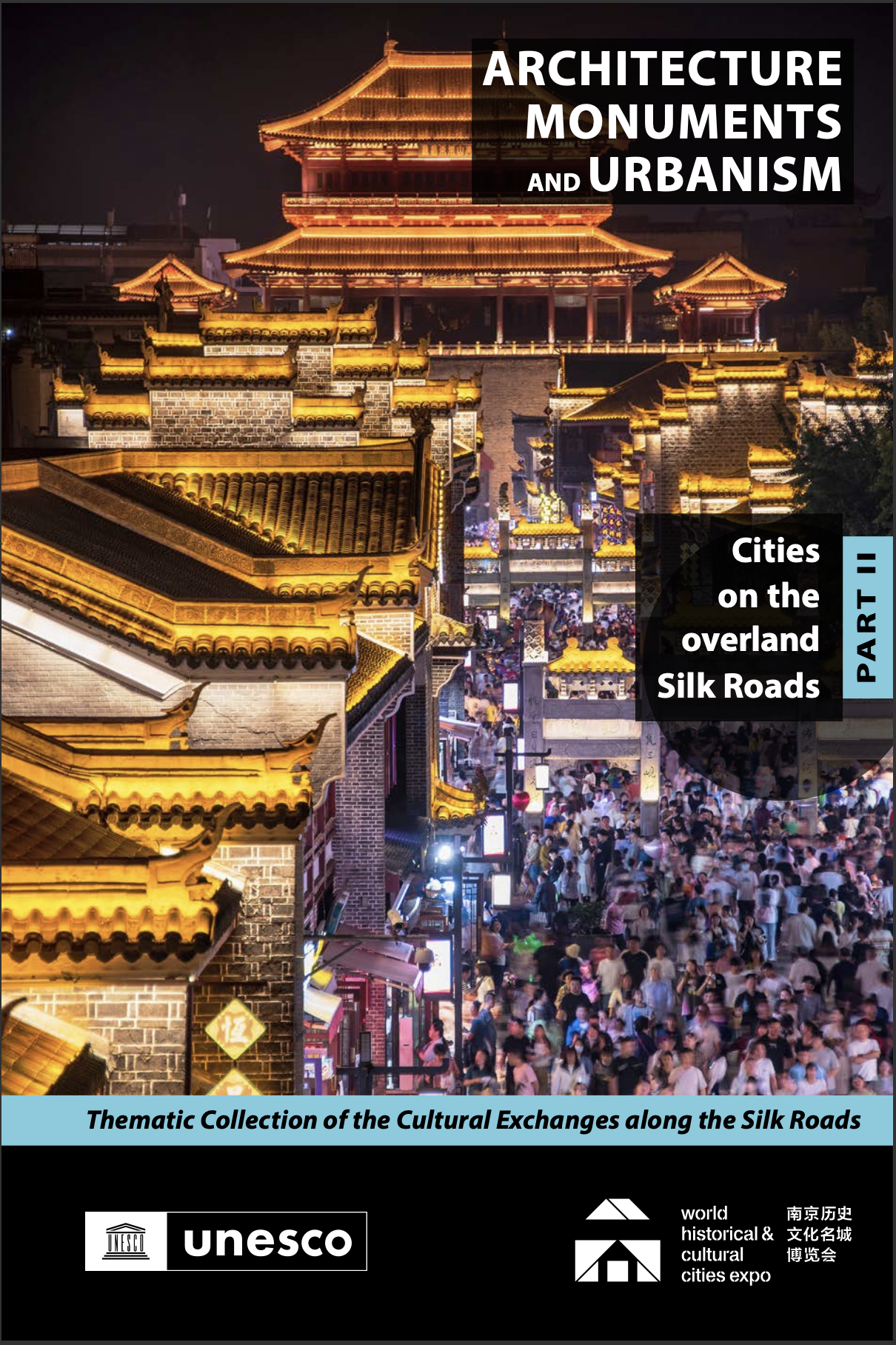

In the international scientific journal Architecture, Monuments and Urbanism, published by the United Nations Educational, Scientific and Cultural Organization (UNESCO) in 2025, an article by the President of the Turkic Academy, Prof. Dr. Shain Mustafayev, co-authored with the renowned Azerbaijani researcher, Professor Jafar Giyasi, has been published.
The article, titled “The Walled City of Baku, Azerbaijan”, featured in the second part of the journal, is dedicated to the history and architectural heritage of ancient and medieval Baku, a unique cultural phenomenon that reflects the millennia-long development of the city’s urban environment and architectural traditions. The authors trace the centuries-long evolution of the Baku Fortress, from early settlements and Roman references to the extensive construction during the Shirvanshahs period and subsequent transformations.
The study emphasizes that the fate of Baku, the capital of the Republic of Azerbaijan and the largest port on the Caspian Sea, has always been closely linked to the Caspian Sea and shaped by the geographic conditions of the Absheron Peninsula, whose subsoil is exceptionally rich in oil and gas. Historical written sources note that, over centuries, the natural emergence and ignition of underground gases were a distinguishing feature of Baku, giving the city a sacred significance in the eyes of ancient people who worshiped fire as a supreme force.
Moreover, the development of Baku as an urban center and its historical trajectory are closely intertwined with a network of land and maritime trade routes that crossed Azerbaijan from ancient times. In fact, Baku is located along the routes of the ancient Silk Road. The evolution of urban planning and the city’s architectural character reflect the stages of development observed in Baku throughout its long history.
The article provides a detailed analysis of urban structures, stone masonry techniques, planning solutions, and decorative methods that formed the basis of the appearance of Icheri Sheher, the historic core of the city and a UNESCO World Heritage site. The study also compares Baku’s architecture with the characteristics of the Caspian coastal environment and economic processes such as trade, crafts, and oil extraction that shaped the urban fabric over centuries.
A significant part of the study is devoted to the cultural interactions between the Caucasus and the Turkic world, which gave rise to the distinctive Baku architectural tradition. The authors demonstrate how local Azerbaijani traditions, Islamic ornamental schemes, Persian compositional techniques, Ottoman fortification elements, and later European architectural influences intertwine in the city’s appearance. Methodologically, the article relies on archaeological findings, written sources, and historical plans.
You can access the full version of the article at the link.